Distance sampling: Survey design
Design robust surveys to estimate animal density and population size, for wildlife researchers, conservation project officers and field staff
distance-sampling
beginner
theory
survey-design
R
- Online course: 1 week part-time from 16 February 2026
- Relate distance sampling theory to your own research and monitoring needs
- Calculate survey effort, including the number and length of transects
- Consider transect placement and environmental/human factors relevant to your field site and questions
You know that distance sampling is a relevant technique for you, perhaps because:
- 📈 You’re tasked with monitoring populations of conservation concern
- 😟 You’re starting a new research project but don’t have the field equipment or budget to trap or photograph animals for capture-mark-recapture
- 👂 Your colleagues or collaborators use distance sampling and you need to contribute to decisions about survey effort and/or logistics in the field
But where do you start planning your surveys? And how can you ensure you collect the data you need? 🤔
We’re here to help!
About the course
You’ll find our Distance sampling: Survey design course useful if you need to:
- Review the theory and apply it confidently to your situation
- Decide how to allocate your survey effort to ensure you get the data you need for decision-making
- Manage a field team who already collect sightings along transects
- Evaluate a survey design created by colleagues, to check it is fit for purpose
Our course is ideal if you’re a complete beginner to distance sampling, or if you need to remind yourself how to deploy this powerful tool
Learning objectives
By the end of this course you will be able to:
- 📏 Calculate the total distance you need to survey, to accurately estimate density for your species and environment
- 🔢 Determine the appropriate number and length of transects, and how many repeat surveys to do
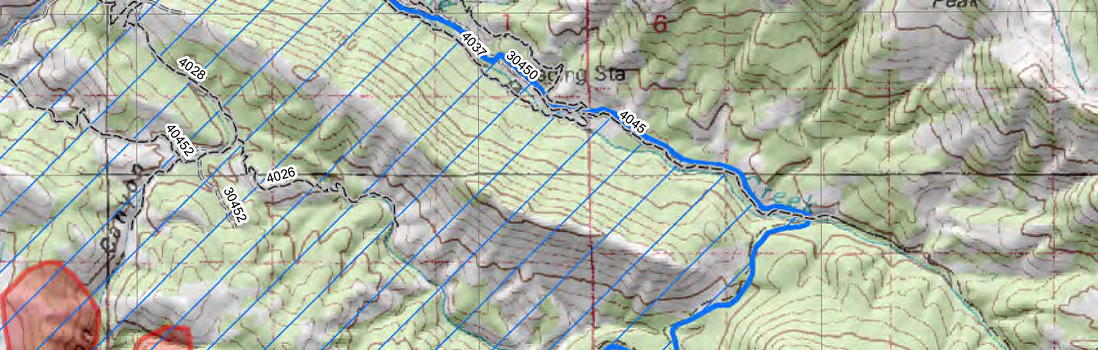
- 🧭 Consider transect placement for your own surveys, or that of your colleagues/clients, taking into account species’ ecology and conservation goals
- 📝 Decide what environmental information to record
Related courses
We have two other courses on Distance sampling running in February/March 2026:
- Theory & applications - suitable if you need to understand and/or teach the fundamentals of distance sampling, but you don’t need to analyse data
- Analysis with R - suitable if you already have wildlife sightings from transects or point counts and need to gain insights from them
Our Theory & applications course is a pre-requisite for this Survey design course!
If you haven’t studied the Theory & applications course before, join it here, or request a link from us to self-study it before 16 February 2026
If you’re unsure which course is suitable for you, we recommend you register for the Theory & applications course. You can decide during the theory course whether to continue with the Analysis or Survey design tracks, or study both!
We are also happy to give you individual advice on choosing a course - do contact us if you’d like guidance
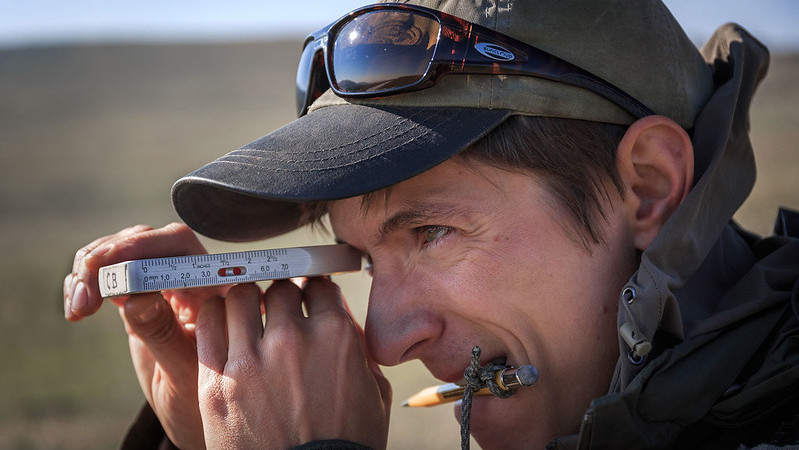
Knowing how to design field surveys is crucial for ensuring you can answer your research questions, and make evidence-based conservation decisions. Poor survey design, without sufficient consideration of the purpose of data collection, wastes resources, time and energy, hindering effective conservation

Dr Lucy Tallents, Founder and Director of VerdantLearn
Register for the course
Visit the Subscriptions page of VerdantLearn’s community to register:
Course dates
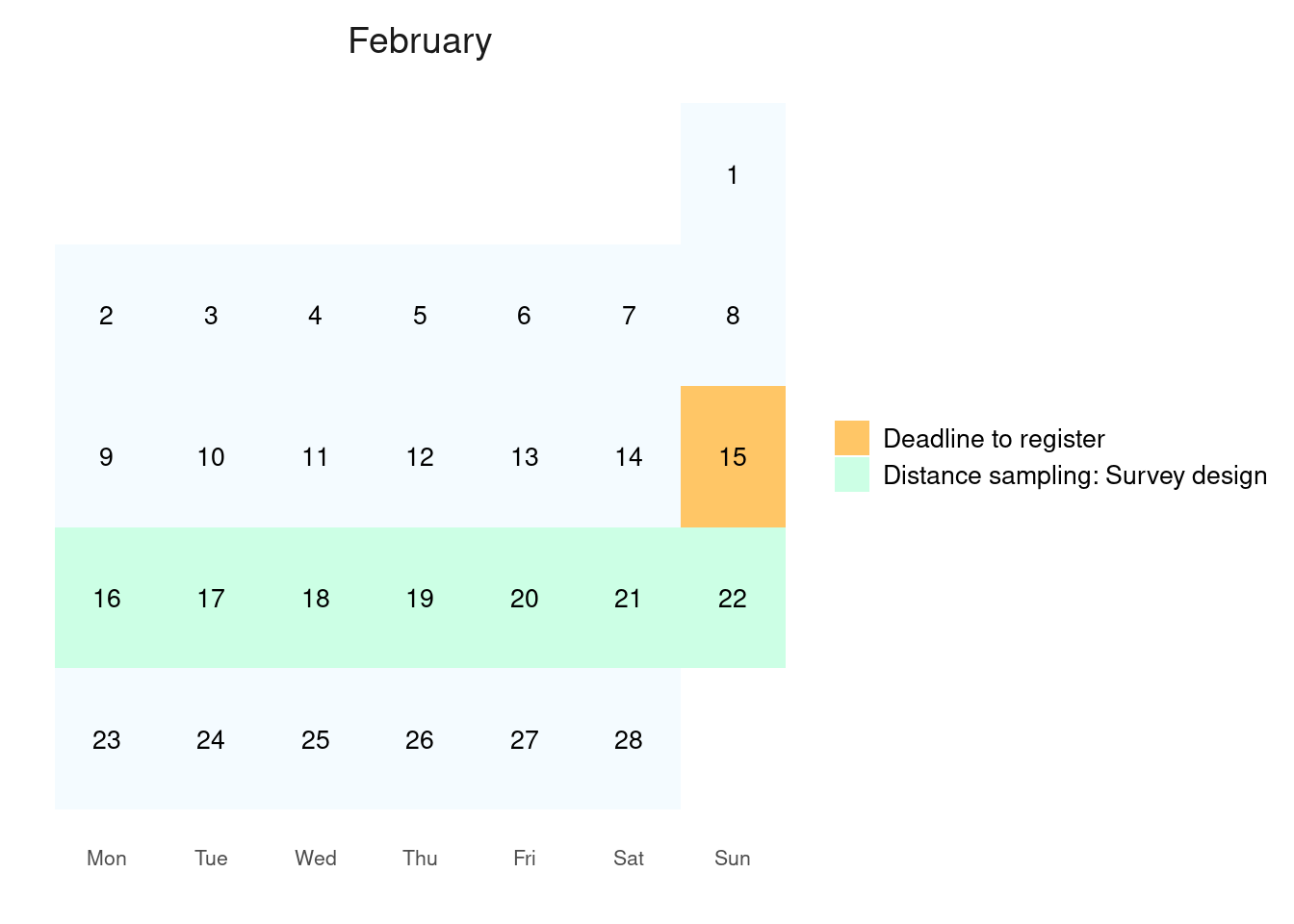
📆 This one-week tutored course starts on Mon 16 February 2026 and ends on Sun 22 February 2026
⏰ Study time is 3-6 hours each week. The timing is completely flexible - you can participate whenever it suits you during the week
Course fees and discounts
The fee for this course is 48 GBP
We offer generous discounts (up to 90% off!) to those who can’t afford the standard course fee:
- Conservationists from low- or middle-income countries1
- Students and currently unwaged
Everyone gets access to the same learning activities and support. If you or your organisation can afford it, paying the higher fee enables VerdantLearn to keep offering courses at affordable prices for everyone. This supports the efforts of conservationists globally, and increases the diversity of learners on our courses, so you benefit too!
To find out what discount you’re eligible for, and gain a coupon code, please complete the form on our discount enquiries page:
Any questions?
Visit our Frequently Asked Questions, or contact us
So, are you ready to design your own surveys to estimate density and the factors that affect it…?
Join our mail-list to stay informed about future courses, events and resources
Footnotes
World Bank list of countries by income level↩︎